
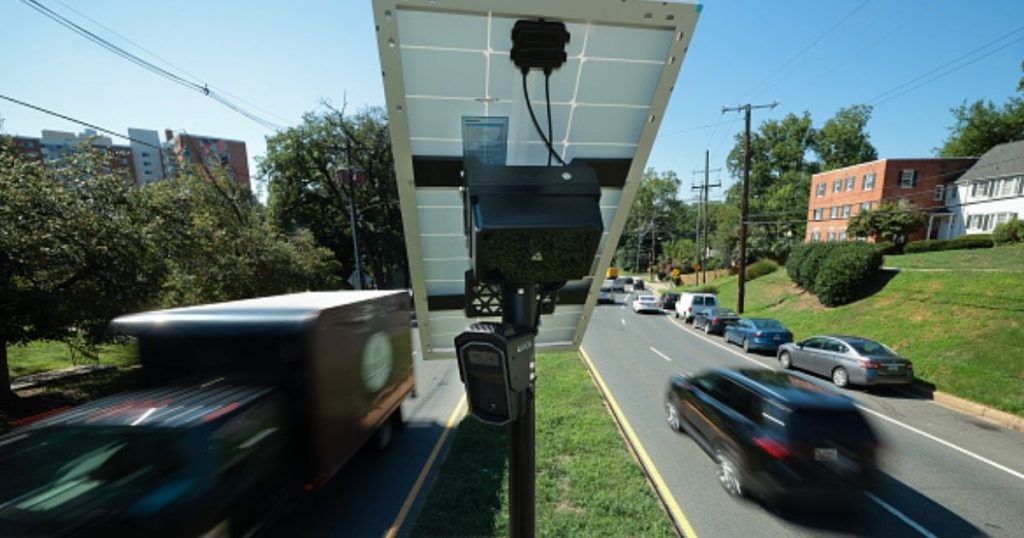
Flock Safety’s police software is drawing fresh scrutiny after reporting that it can trace vehicles and surface potential connections without a driver’s name. WIRED reported that Flock’s OS Investigate (formerly Nightshift) identifies vehicles and ranks drivers’ “associates” by how often they appear together on the same camera network, and that website code reviewed by the outlet listed 45 available functions—from plate scans and camera metadata to arrest records, case files, and 911 dispatch logs.
What the reporting says
According to the Daily Caller News Foundation (DCNF), police using Flock’s AI tools can track a vehicle based on its location and movements. WIRED’s review of Flock’s website code cited 45 OS Investigate functions tied to police data sources and camera hits.

Critics’ warnings
“This [Flock tool] really crosses a line from a tool that’s used to investigate suspicious people to deciding who is suspicious,” Jay Stanley, a senior policy analyst with the ACLU’s Speech, Privacy and Technology Project, told the DCNF. He cautioned that algorithmic flags on “suspicious” driving patterns could put more people under a law-enforcement microscope.
Alex Marthews, national chair of Restore the Fourth, told the DCNF he worries officers may lean on AI outputs without the training to question them. If an AI model were used to surface “the top 10” suspected offenders and it hallucinated, “then they could arrest innocent people without due process,” he said.
Flock’s stance and a police testimonial
Flock CEO Garrett Langley told Fox News, in comments reposted by Sen. Rand Paul on X, that Americans should prioritize “compromise” between safety and privacy: “How do we have our safety, and how do we balance privacy.” Langley later responded on X, “that was not my comment. We believe in the constitution at Flock. I hope you can agree that Americans deserve to be safe.”

Flock describes its FlockOS—which hosts OS Investigate—as a command center “anywhere,” per the company’s website. A testimonial on Flock’s site quotes Major Patrick Krieg of the Dunwoody, Georgia Police Department: “We watched the vehicles enter through LPR, tracked them across the city, and our teams were in place before the suspects even got out of their cars.”
How other vendors draw lines
George Cheng, CEO and co-founder of Code Four, told the DCNF that AI’s value is organizing the overwhelming volume of case material—such as body-camera footage and call records—so detectives can query it in plain English with clear source citations. He drew a line between analyzing evidence in an open case and scanning the public to generate suspects, urging audit trails and keeping agency data from training outside models.
Policy push: warrants and limits
“AI is simply a tool,” James Czerniawski, head of emerging technology policy at Consumer Choice Center, told the DCNF, arguing that outcomes—such as potential Fourth Amendment violations—should be the focus of regulation. He called warrants “your best friend” for both police and due-process protections.
Republican Rep. Keith Self told the DCNF his proposed PRIVACY Act would prohibit federal agencies from using outputs from applications such as Flock Safety’s OS Investigate without a warrant. He said the bill would also limit retention of camera-captured data to 30 days with a warrant, unless it’s evidence or a court grants an extension. “AI has supercharged the surveillance state,” Self told the DCNF, urging Congress to act.
Republican Sen. Josh Hawley opened a Senate subcommittee inquiry into Flock cameras, according to a letter he sent to Langley.
Abuse cases on the record
The Institute for Justice reported more than 100 cases of alleged automated license-plate reader (ALPR) abuse in a database published Aug. 12. Among them: a Georgia police chief who, according to the Washington Post, ran 600 searches to track his ex-girlfriend and her daughter.